Discovery
Music has long had a social aspect deeply entwined in its experience, Spotify has grown to be one the main music providers of our generation, but was lacking a social element to it. I noticed my friends and I were constantly sharing tracks and playlists through Facebook Messenger, jumping out of the app to have the conversation and then jumping back in to listen. It was fragmented and clunky, and it felt like an obvious gap.
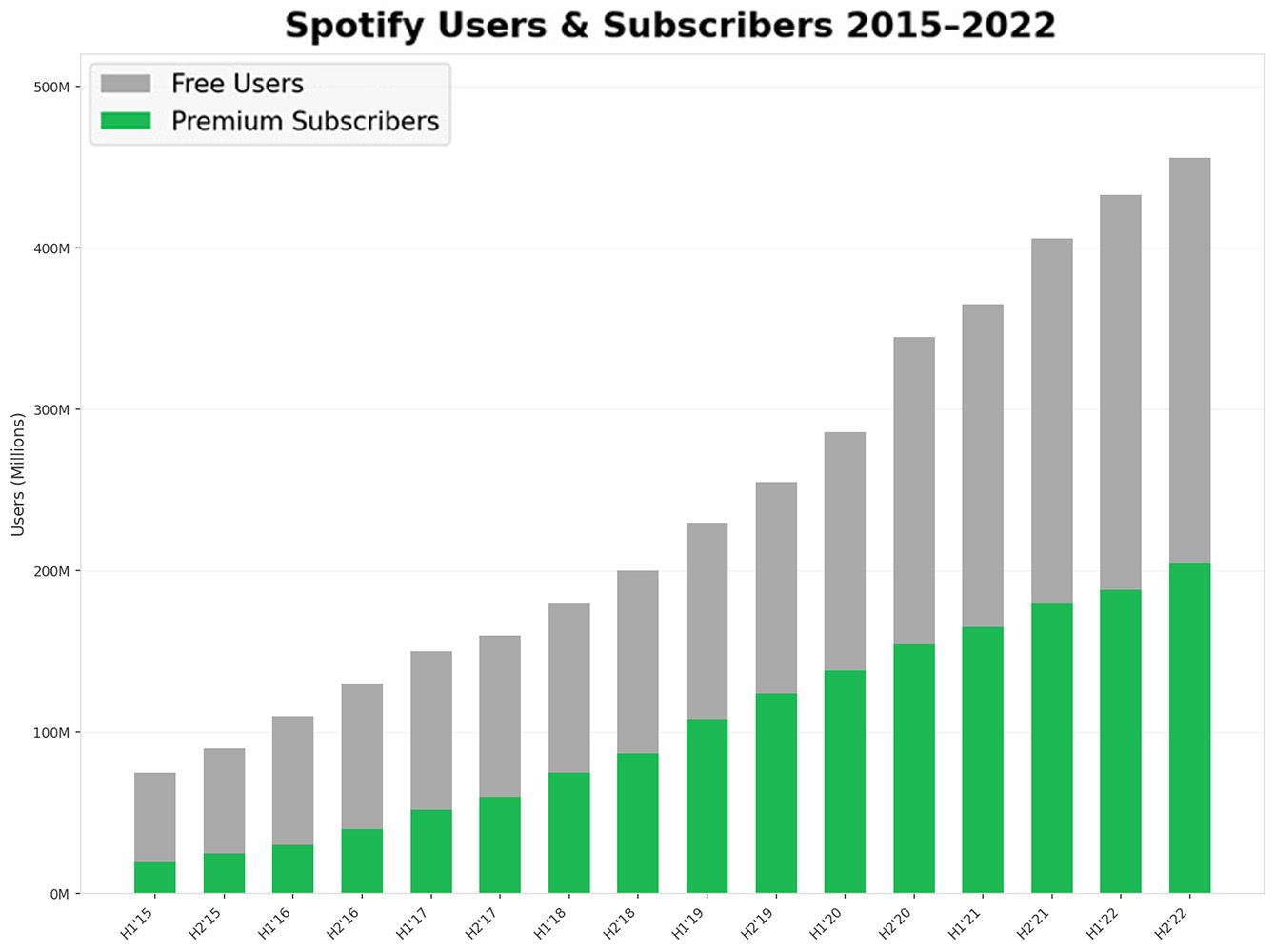
Spotify’s growth depends heavily on Premium conversions, subscription revenue accounts for around 88% of total income. A feature that keeps users inside the app longer, deepens social engagement, and gives people a reason to bring their friends onto the platform represents a meaningful retention and conversion opportunity.
Research
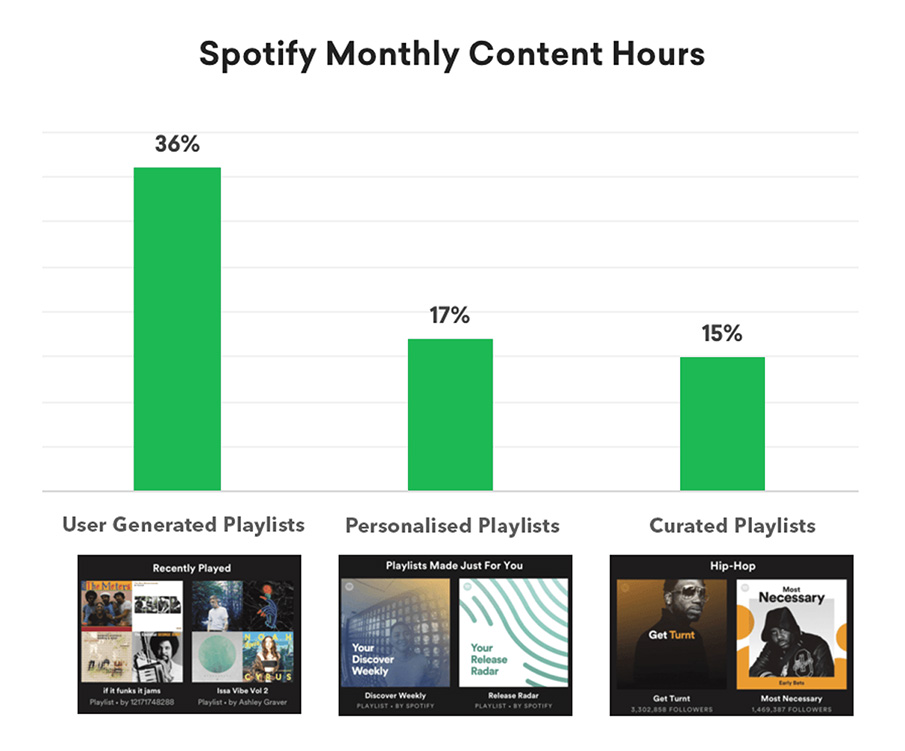
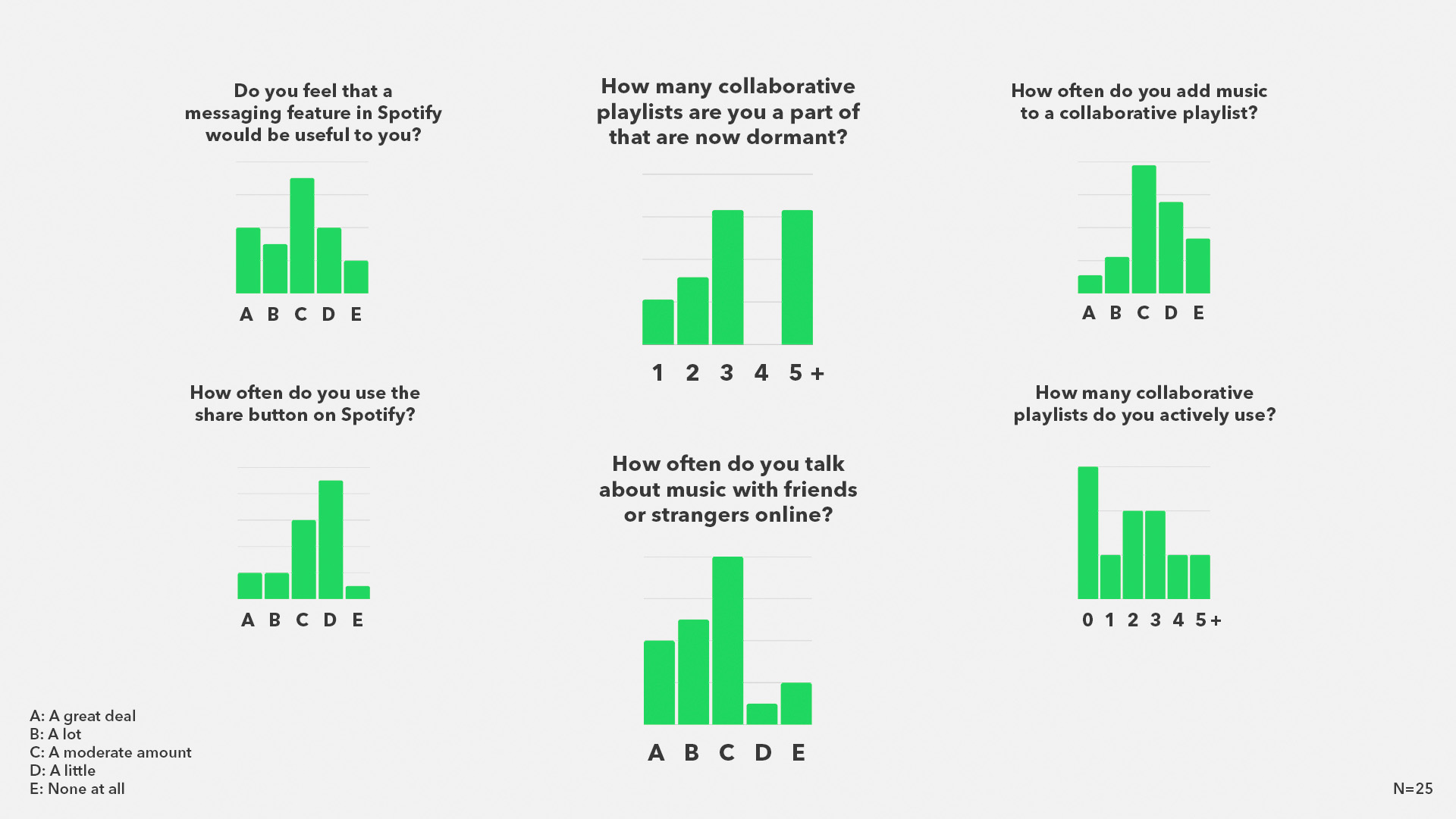
To validate the problem, I ran a short survey with 25 respondents exploring how people's music habits intersect with their social lives. I wanted to understand how users engage with collaborative playlists, as I discovered it is the dominant form of user generated content on Spotify, and whether there were unmet needs within that experience.
The results were telling, respondents were involved in multiple collaborative playlists, though a significant portion of them had gone dormant. This indicated initial enthusiasm that wasn't being sustained, an opportunity to keep user engaged and returning to look through the playlist rather than adding a track from another area of Spotify and forgetting about it. The share button was used regularly, indicating an existing desire to surface music to friends and start conversations around it. When asked directly whether an in-app messaging feature would be useful, responses were mixed, but the behavioural data told a clear story: the social impulse was already there, just happening outside the app.
User Personas
Daniel, 34
Research Scientist
Daniel enjoys music as much as anyone, but it isn't a defining part of his personality. He has a few favourite bands, goes to concerts occasionally, and mostly shares songs with close friends and his partner. His busy schedule leaves little mental bandwidth for active music discovery, he uses music primarily as a backdrop to everyday life rather than something to engage with deeply.
Frustration
Wants to discover new music but doesn't have the time or energy to go looking for it. When a friend shares something good, the conversation happens over Messenger and the track gets lost.
Goal
A low-effort way to stay musically connected to the people he's close to.
Erika, 26
Bartender
Music is central to Erika's identity. She's embedded in subcultures where taste is social currency, shares music on her Instagram stories multiple times a week, and maintains multiple group chats outside Spotify to talk with different friend groups. Each group has its own shared playlists. She tends to stay within her genres but actively explores new artists and is often the one setting the tone for what her circles are listening to.
Frustration
Her music social life is scattered across Instagram, WhatsApp, and Spotify - none of them talk to each other. The playlists live in Spotify but conversations don't.
Goal
One place where the music and the conversation around it can coexist.
Insights
- Users are actively sharing music with friends but it's happening outside of Spotify.
- Collaborative playlists show initial engagement but lack the social layers to sustain it over time.
- The share button is used regularly, showing users want to distribute music amongst friends, but the interaction is a dead-end.
Playlist Chats and Track Comments
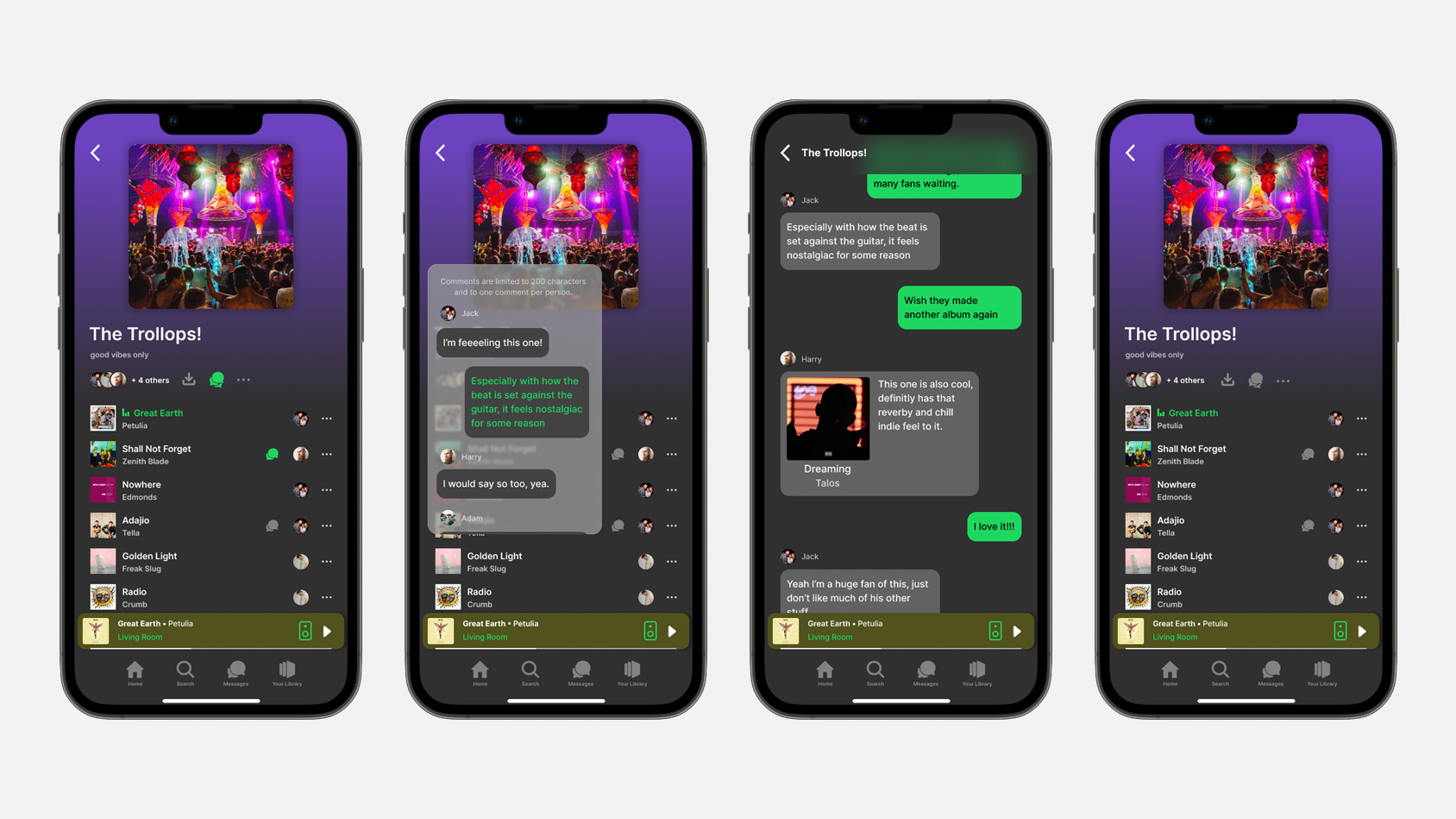
The gap clearly identified; people want to talk about music with their friends, but Spotify forces them to do it elsewhere. A playlist group chat solves the core retention problem by keeping users in the app, deepening engagement, and giving them a social reason to return. However, group chats can drift off-topic, so I added per-song comments as a lightweight way to react to individual tracks without cluttering the main conversation. Easing load on the playlist group chat from topics getting lost in noise.
This addresses both personas. Erika gets the social hub she's been cobbling together across three apps, and Daniel gets a low-friction way to stay connected to his friends' music taste without spending precious time actively hunting for it.
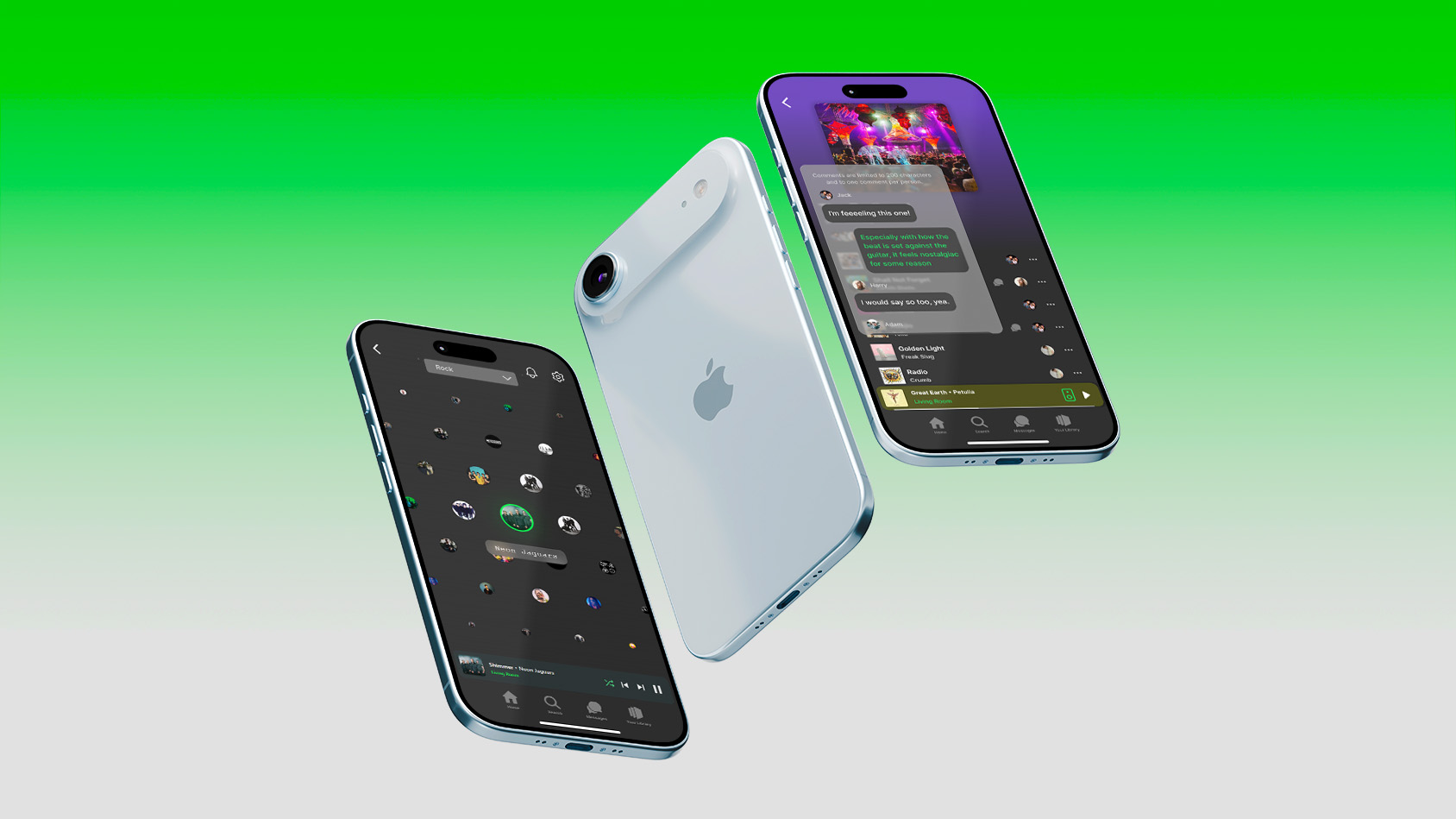
The prototype demonstrates the full flow of starting a playlist chat, browsing shared playlists, and leaving comments on individual tracks. The interaction model borrows from familiar patterns (group chats, comment threads) but anchors them directly to the playlist experience.
Artist Discovery
This feature is designed more toward Daniel's behaviour but works for Erika too, especially when she's exploring outside her usual circles. It's built for people who want to discover new artists without the time commitment of deep-diving playlists or random algorithm rabbit holes. The spatial grid interaction is immediate and tactile, where you swipe, lock onto an artist and hear their music. It offers more control as a quick-fire discovery for users on a time budget who want something more directed than passive listening but less exhausting than active curation.
The first few songs would start playing from the most popular timestamp of the artists highest rated tracks, this doesn't drop the user in unknown territory and might trigger a memory of listening to the artist's catchiest hook, but not knowing who the artist is.
Reflection
Both these features address the real gaps I found with research. The playlist group chat solves the fragmentation problem of music related chatting occurring outside the Spotify app. I'd want to validate that users prefer to use in-app messaging rather than their existing method of communication. There is the human problem of friction when changing social habits, even when the alternative is more efficient.
The artist discovery feature is deliberately tactile and responsive, giving it extra depth to simple music listening, but I don't know if it can scale and instigate re-use after the novelty of the experience wears off. Does it actually function better to help people find more music, or is it just satisfying to scroll through? I would test retention over time, if users come back to it or if it is a one-time experience they'd forget about. There is also an immense amount of genres and sub-generes in Spotify's database. A simple drop down menu wouldn't be effective in navigating the entire catalogue. A genre to sub-genre selection interface might need to be developed. Making the extents of each subgenre grid blend into the next is also a possibility for are more explorative experience.
If I revisited this project, I would focus on testing assumptions around playlist chat adoption. Do users enjoy talking and leaving comments in the app, or are they satisfied enough with the existing sharing features on offer? For the artist discovery, I would want to see if interaction leads to any meaningful engagement, if users follow artists and save songs to playlists from the feature as well as if there is repeated use over time.