Context
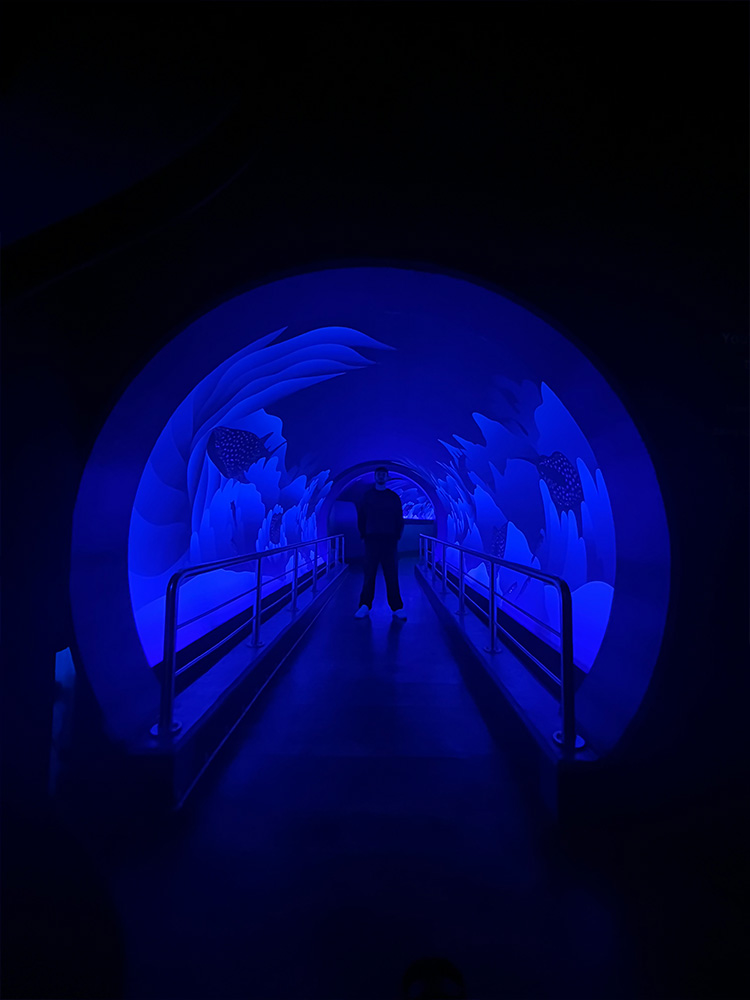
Created to welcome families with children of all ages, this temporary installation at Sealife Melbourne addressed an urgent need to mask their main underwater tunnel attraction during its renovation period.
Caption — material, context, or process note
Overview
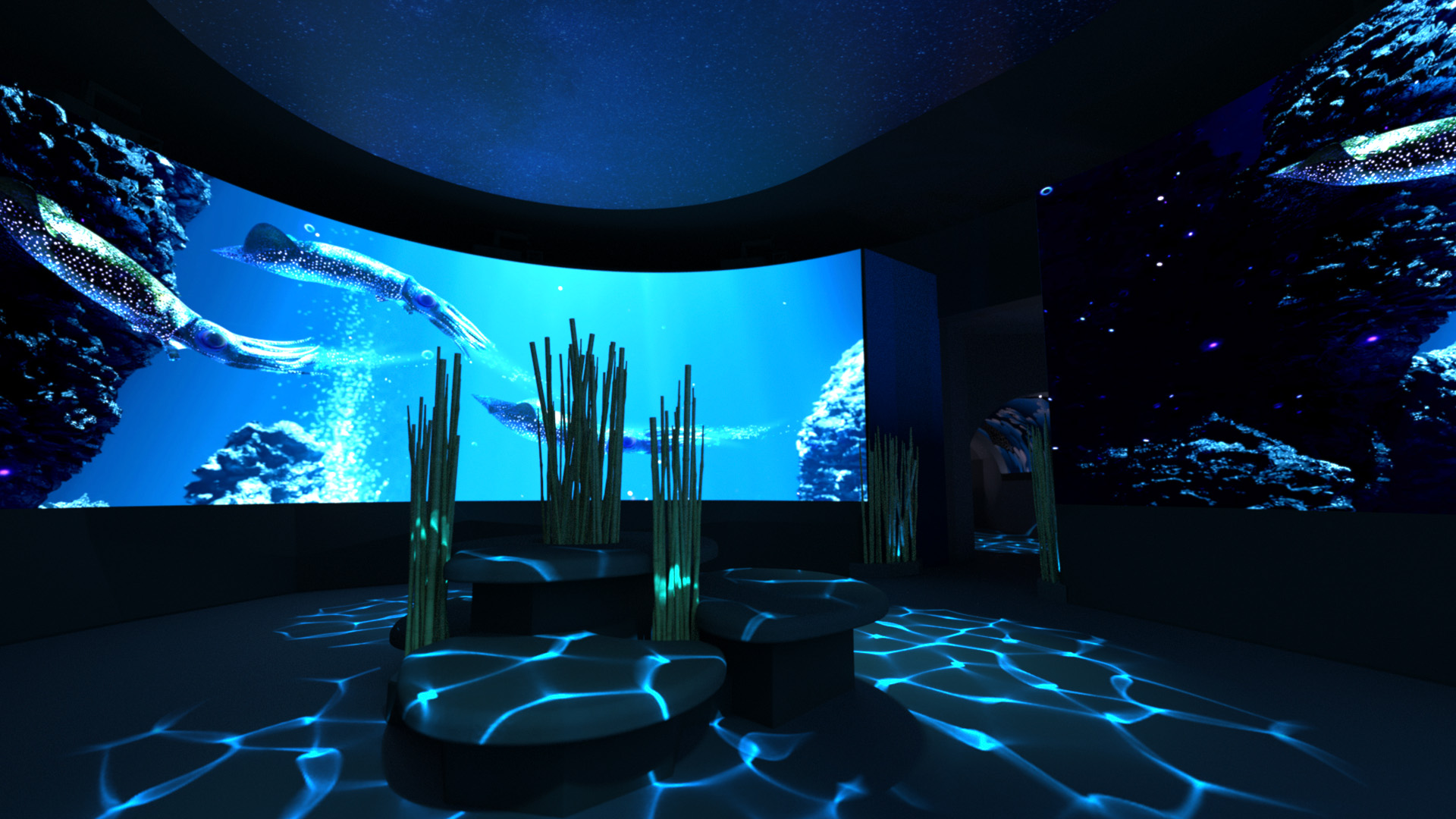
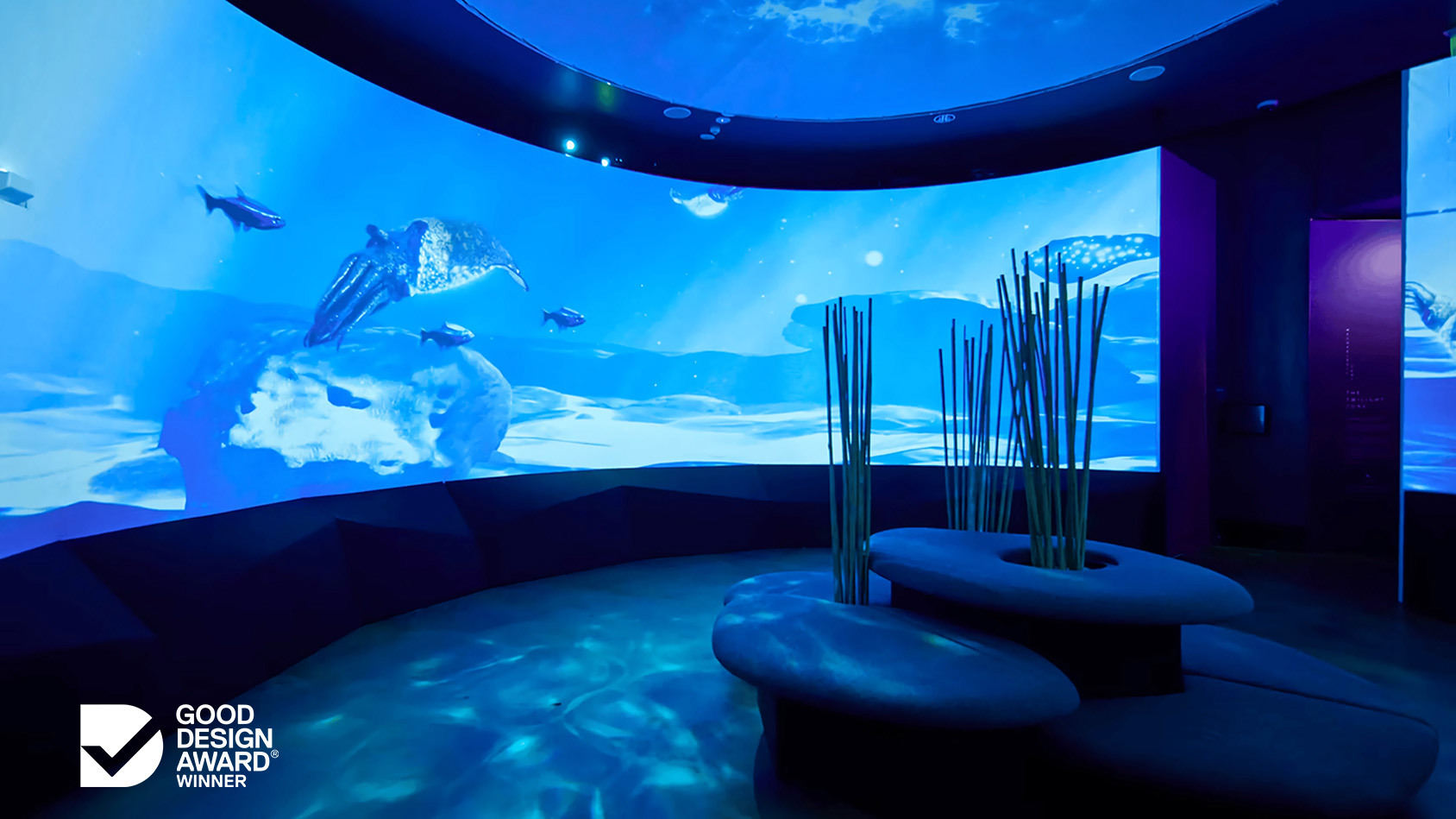
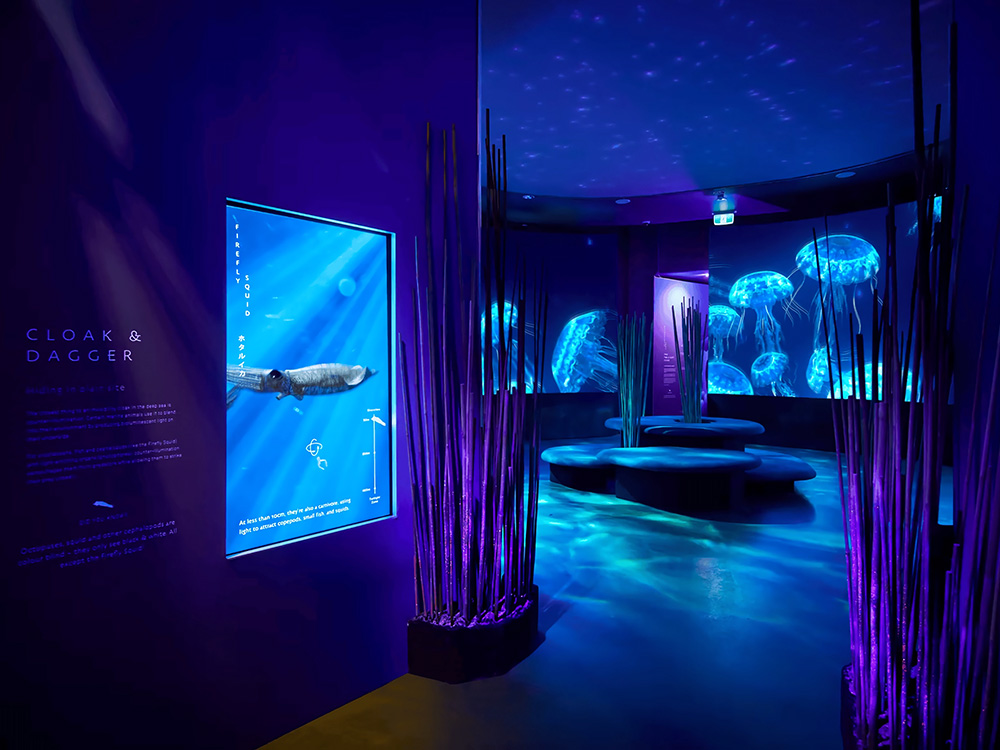
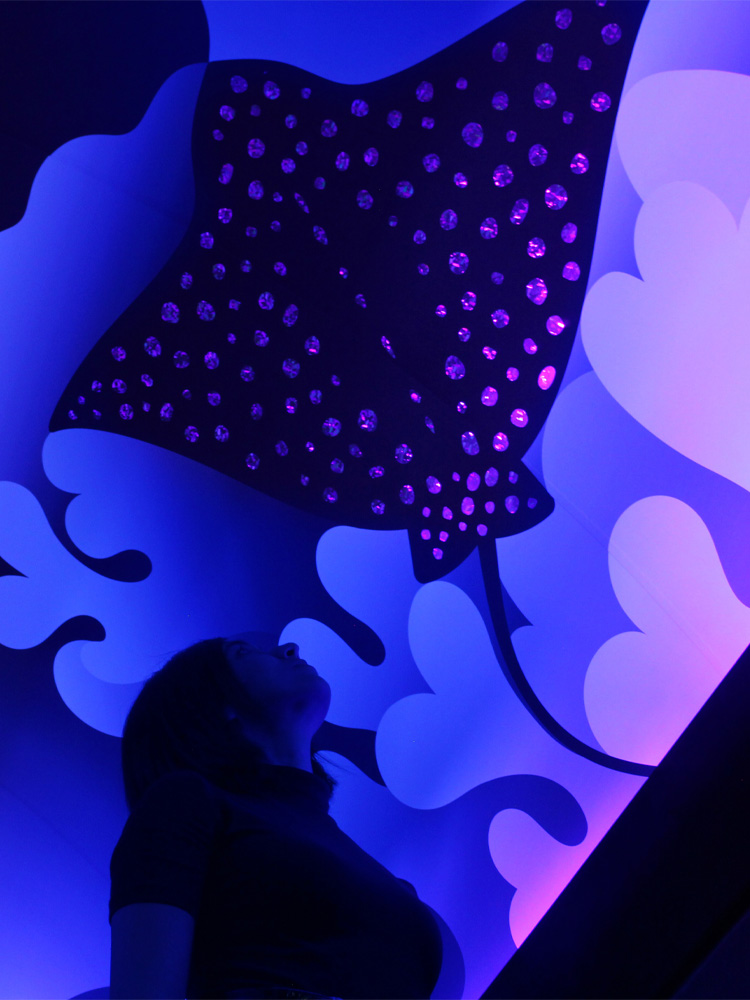
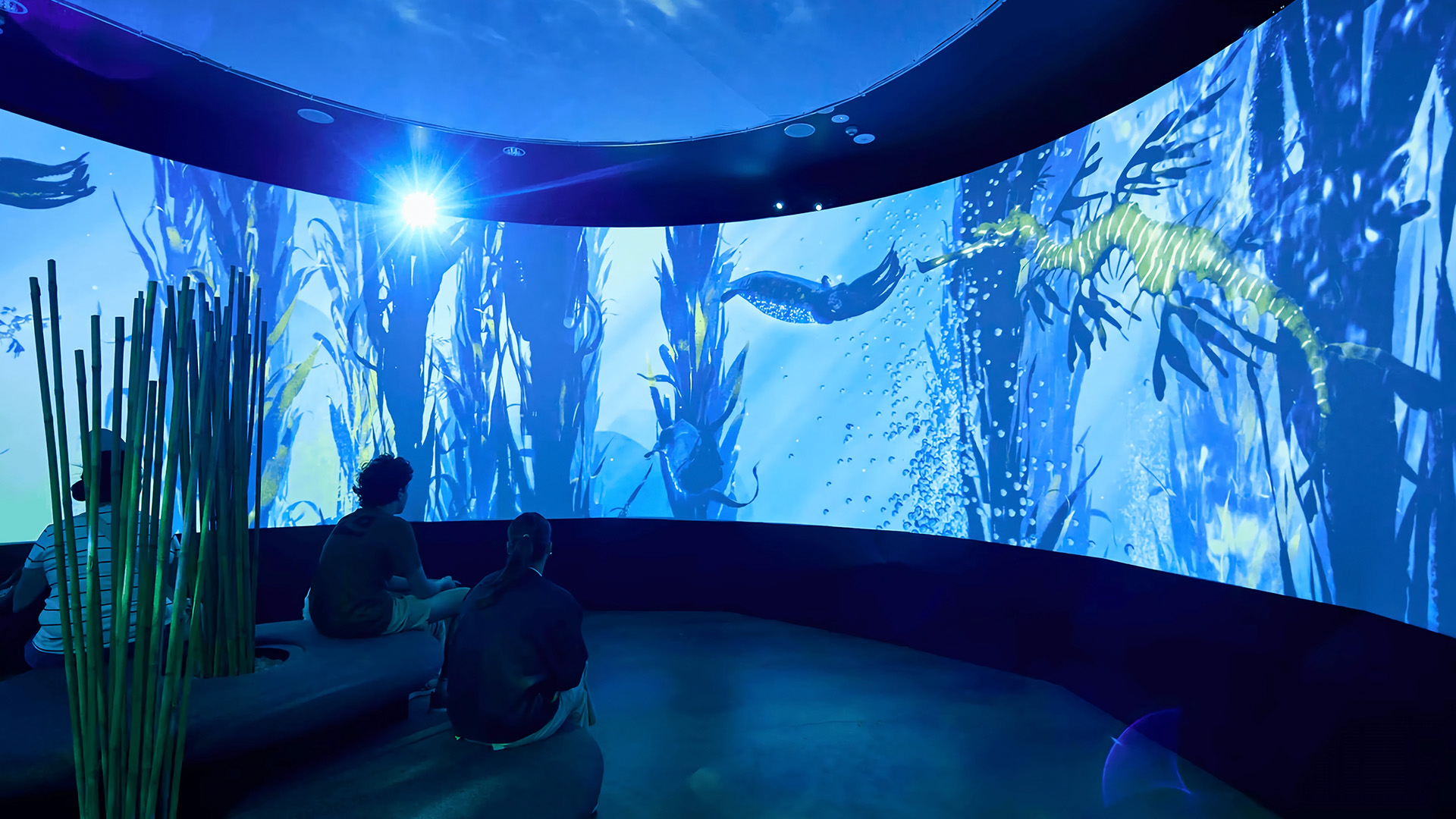
Journeying into the world of living light, the team curated an immersive exhibit with motion tracking interaction, 360 degree projection soundscape, fluorescent graphics and interactive touchscreen content.
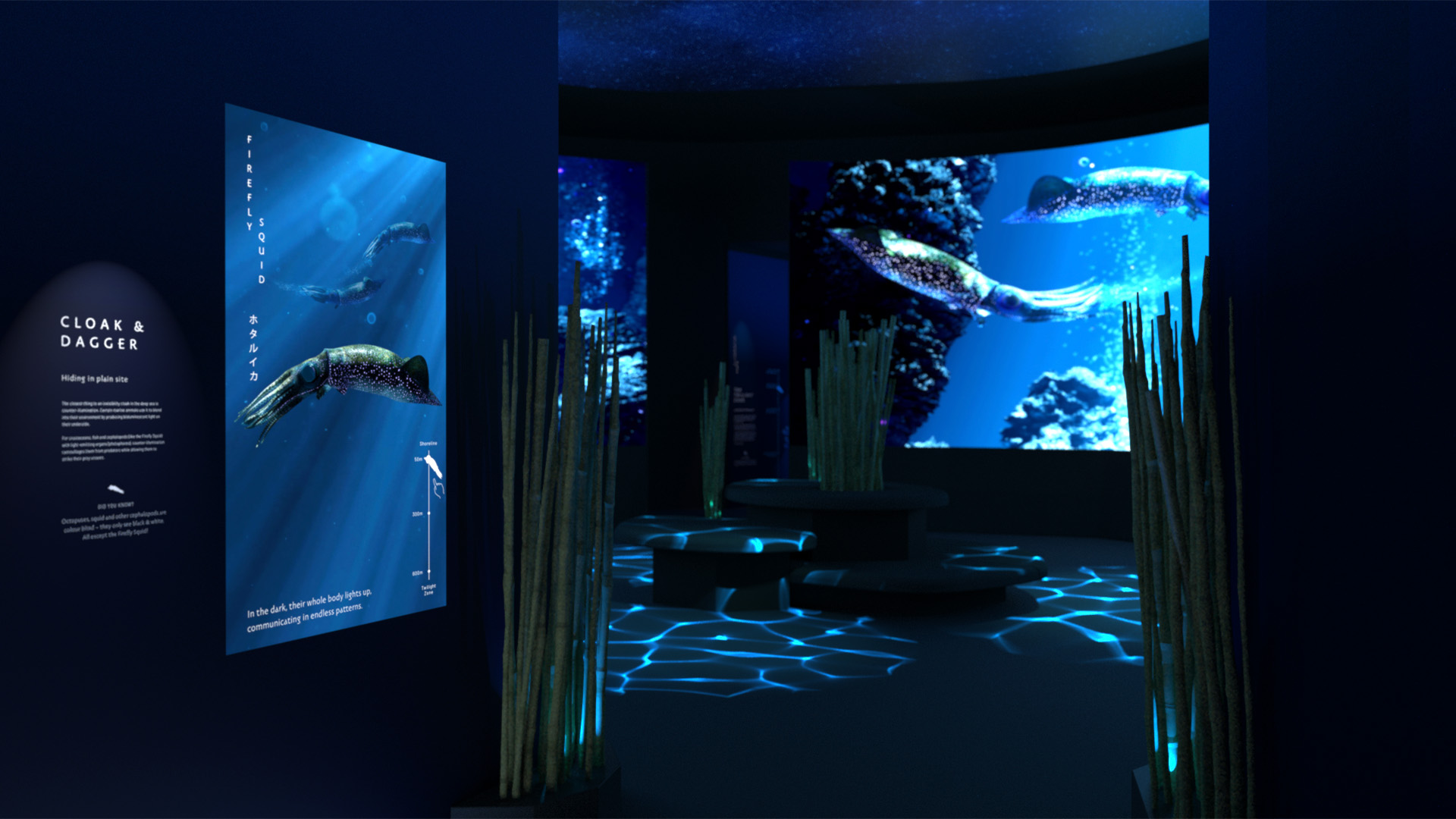
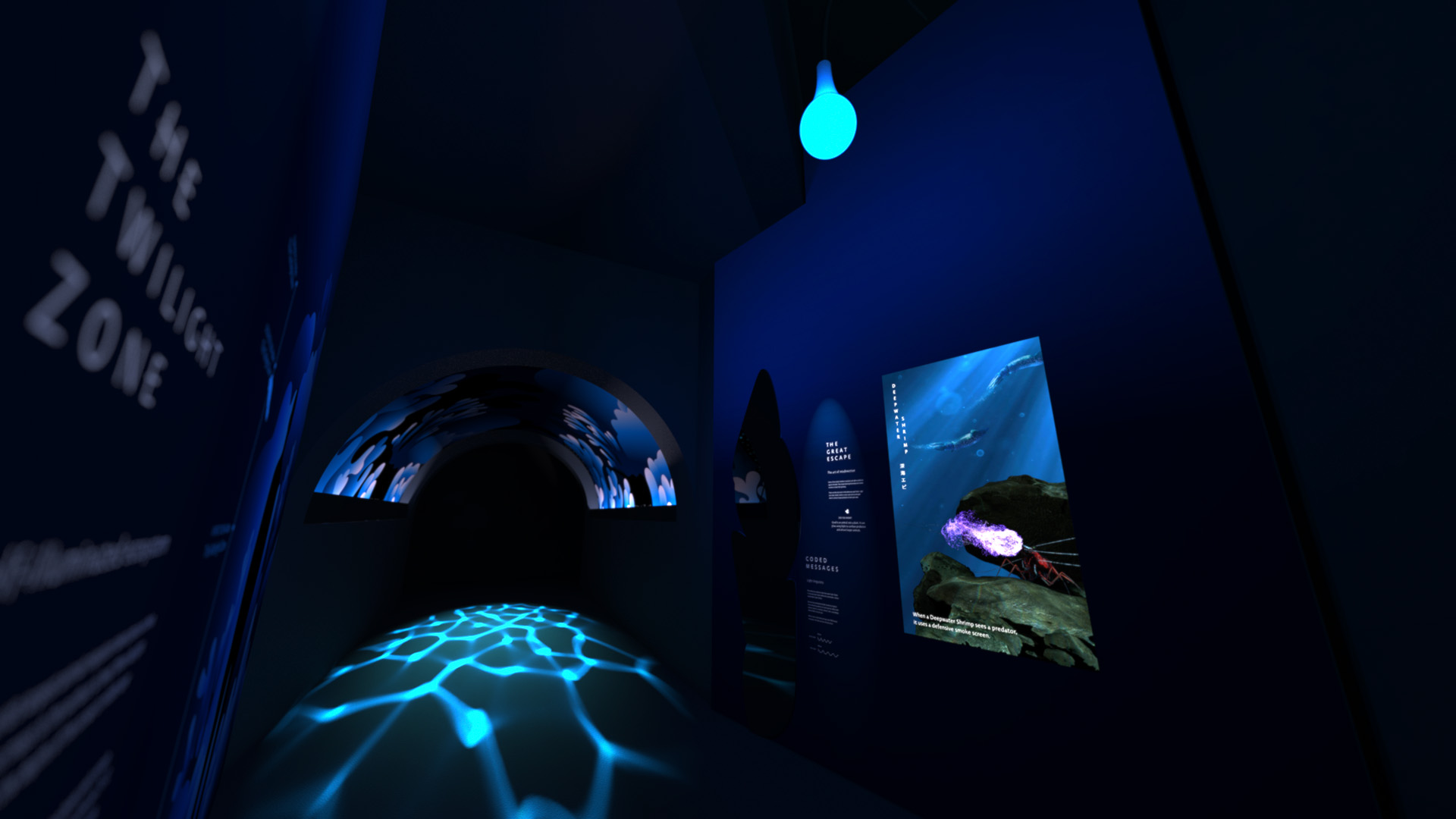
The theme of the exhibition encapsulated the bioluminescent bays of Toyama, Japan. Through various touchscreens, interactive projectors and a 360-degree projection, visitors could experience and learn more about the mesmerizing beauty of this 600 meter deep environment and its inhabitants. Visitors learned about the Firefly Squid, Deepwater Shrimp and Anglerfish and how they use bioluminescence for attack and defence.
Process
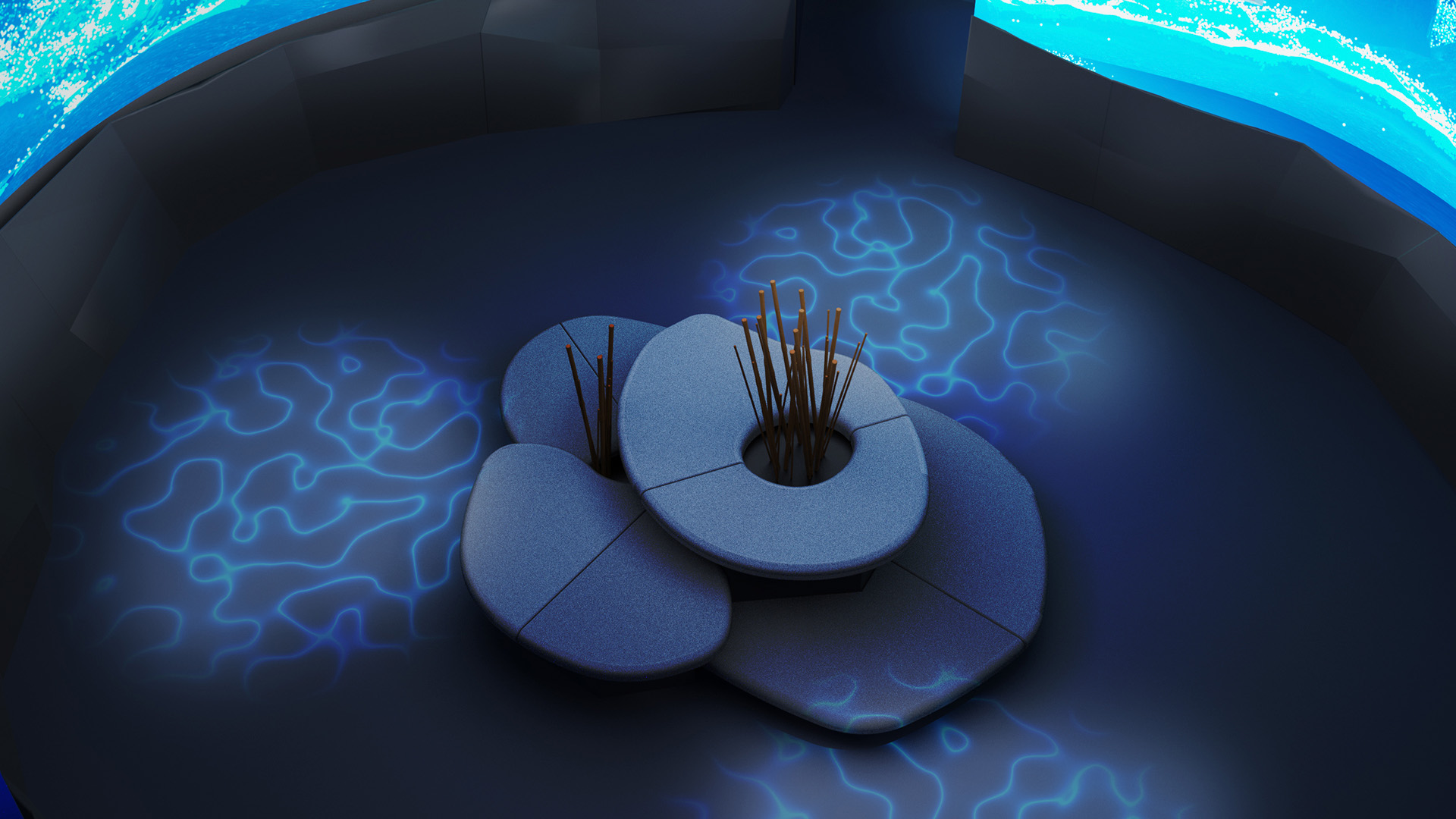
I was involved with the design of the main seating in the centre of the main room. Mimicking a coral element found in the sea, it was a good spot for visitors to park prams and to sit and watch the visuals. I also designed the lightbox featuring the submerged logo at the start of the exhibition and the black felt ‘rocks’ at the feet of the wide projector screens, preventing people from getting too close.
Proper site measurements were critical to getting the design and proportions right first time, as the large radii of the projector canvases and rock formations required precise calculations.
Masking
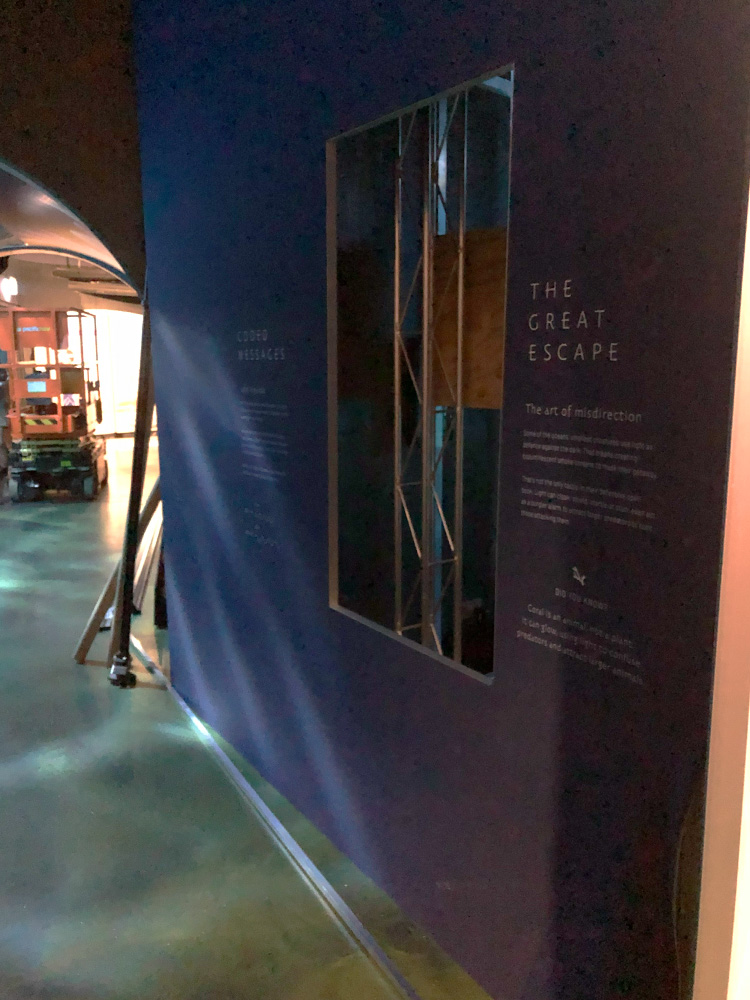
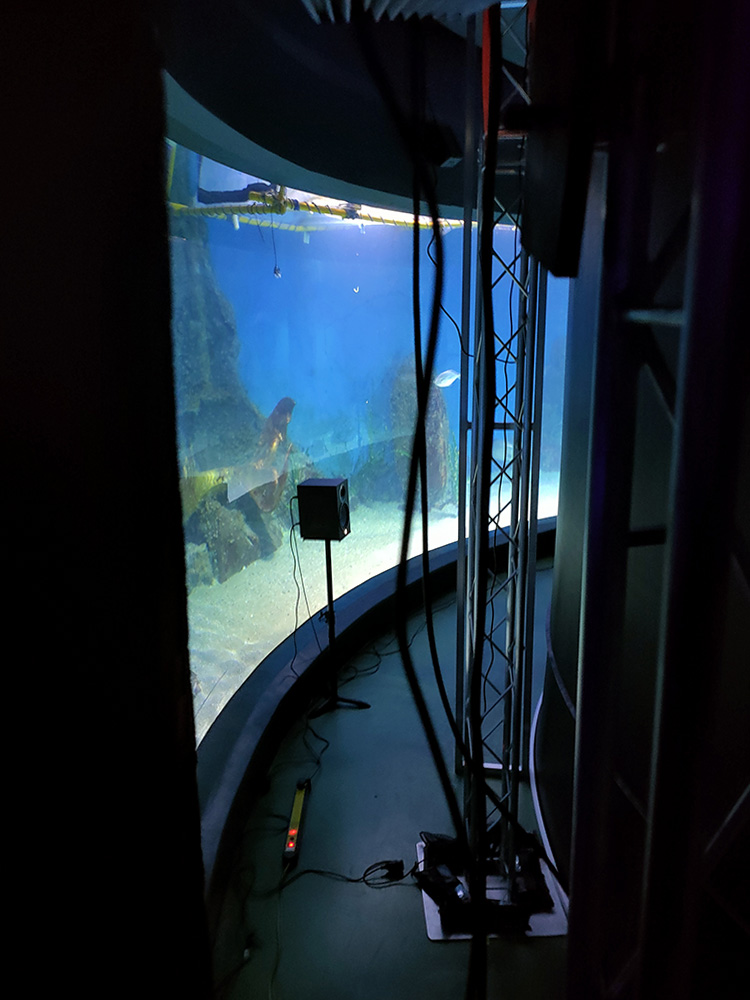
Aluminium trusses held the projectors to their required positions, ensuring optimal projection quality and safety. Speakers and projection systems were strategically placed to enhance the immersive experience and were fully autonomous and controlled remotely.
Renders
I produced renders for initial marketing material, presentation to the client and construction documentation. They helped visualize the design and communicate the intended aesthetic and functionality.
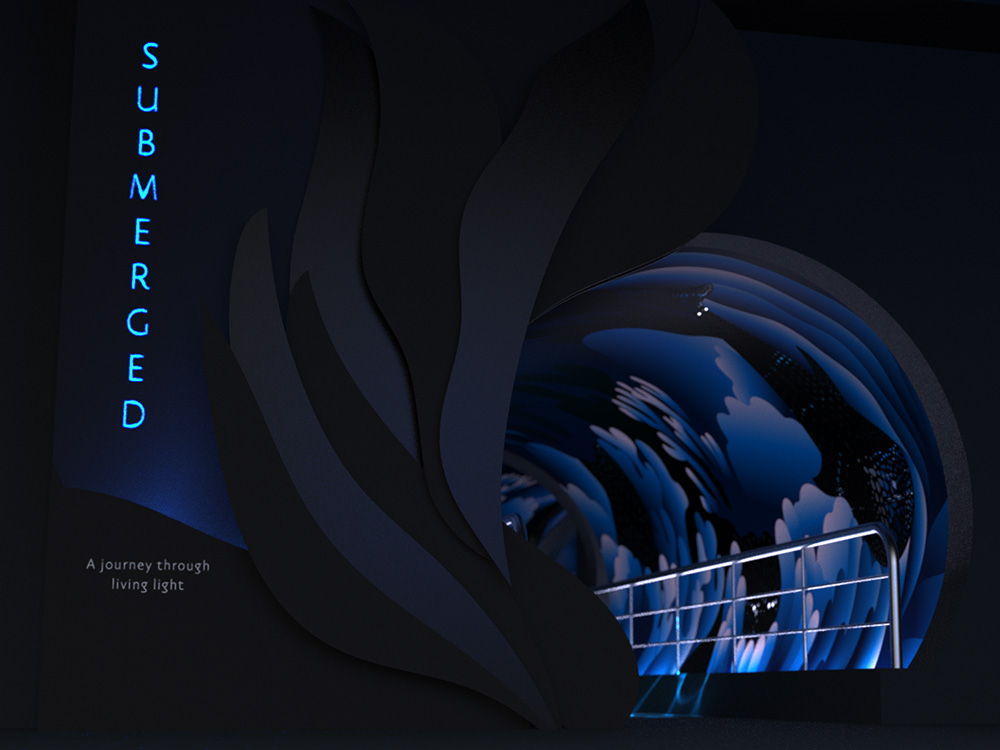
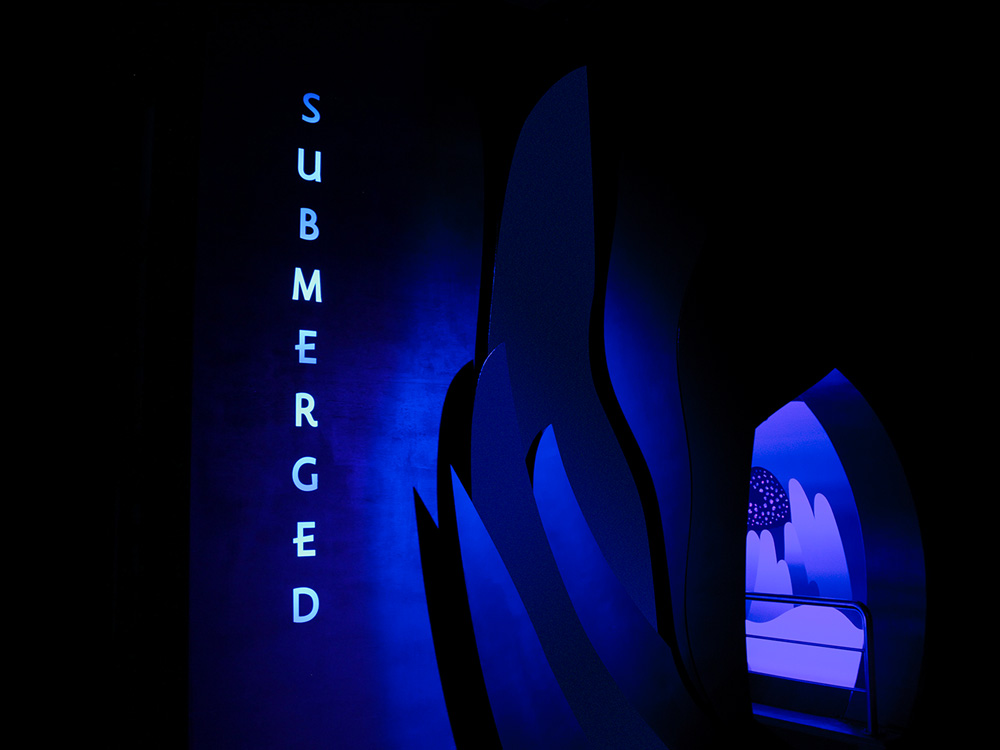
My renders and the final product, renders were used to communicate the design intent and facilitate the construction process.