Concept
The concept phase is where ideas are born and nurtured. Undoubtedly one of my favourite parts of the design process, it's where I can ideate as freely as possible (within the constraints of the project brief).
Sketching
Sketching is the foundation of my design process, allowing for rapid exploration of ideas and concepts. Through both analog and digital sketching techniques, I develop initial concepts and iterate on them to refine the optimal design direction.
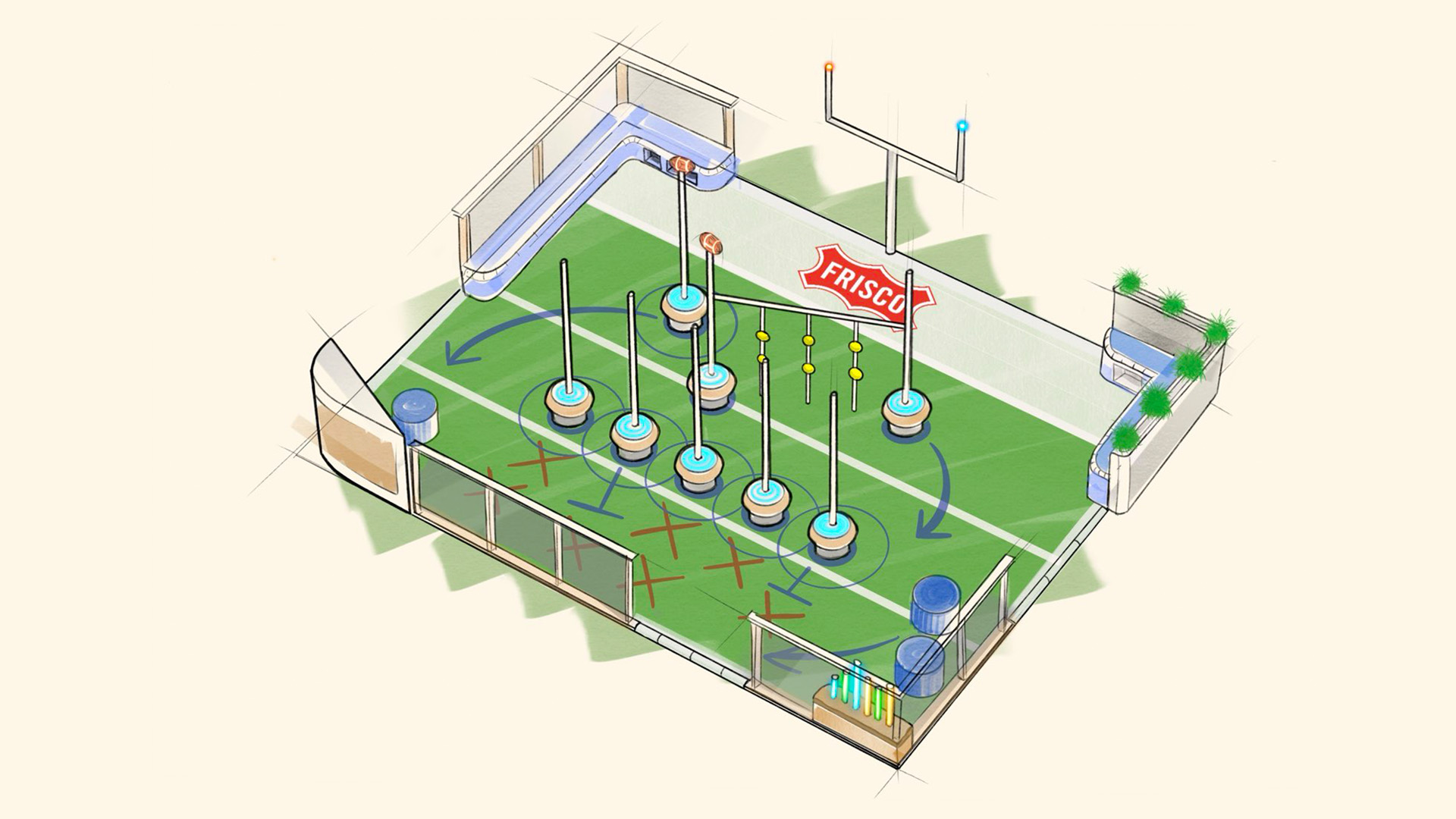
An early concept focusing purely on an NFL styled space for the American market, bringing whiteboard-strategy details to the pitch
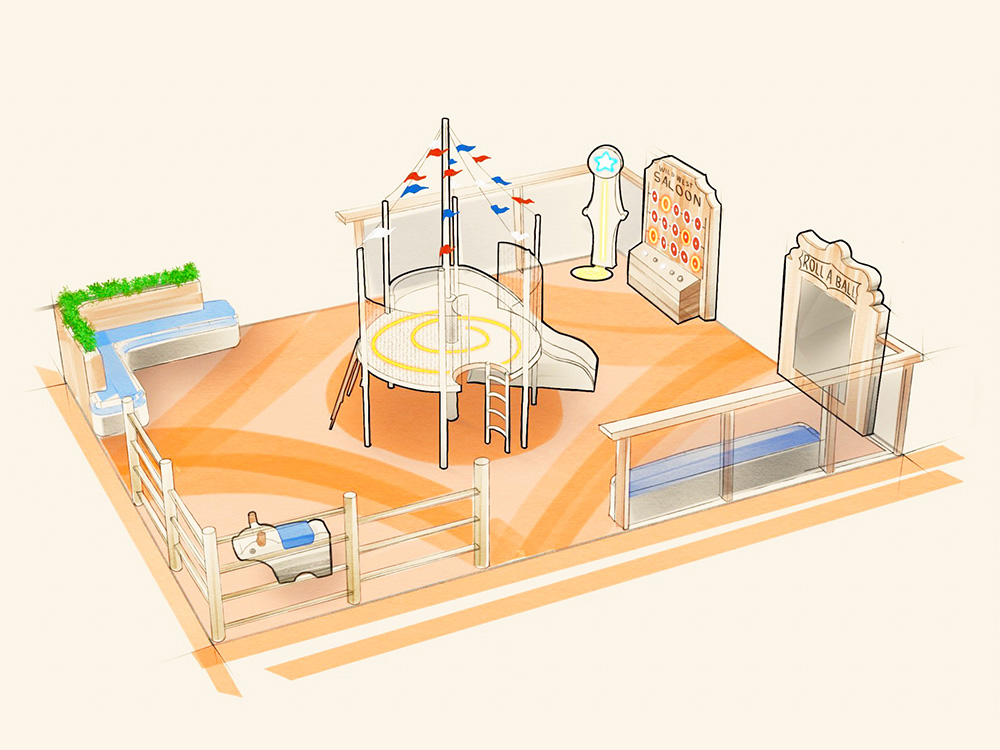
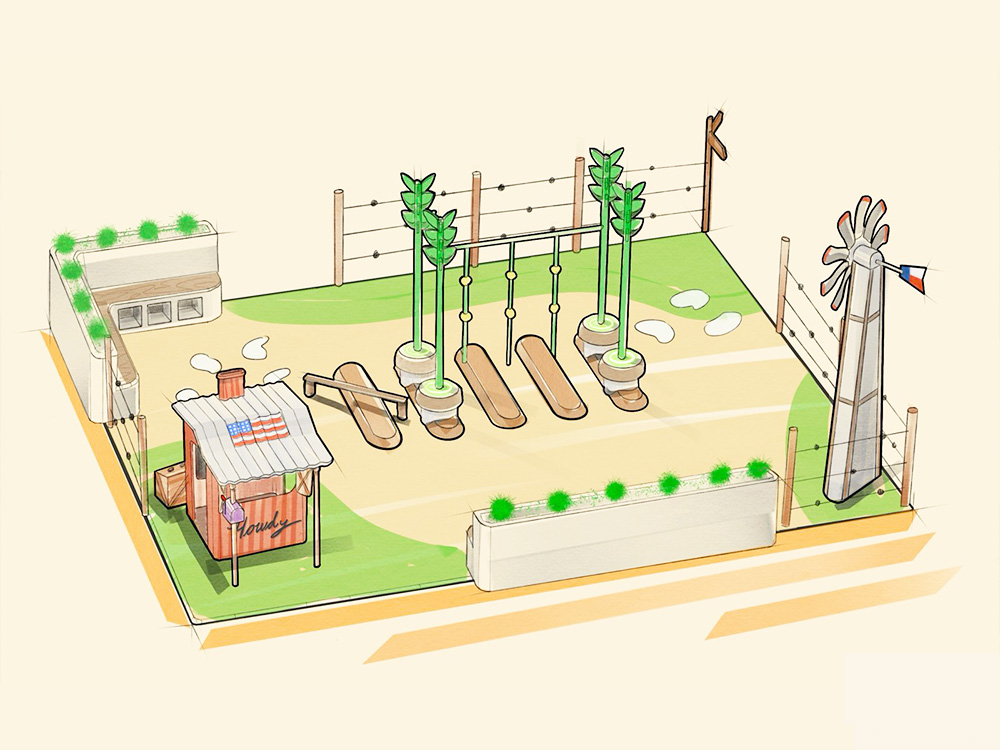
I employ various sketching techniques depending on the project requirements and stage of development. From quick thumbnail sketches to detailed technical drawings, each serves their own purpose in the process.
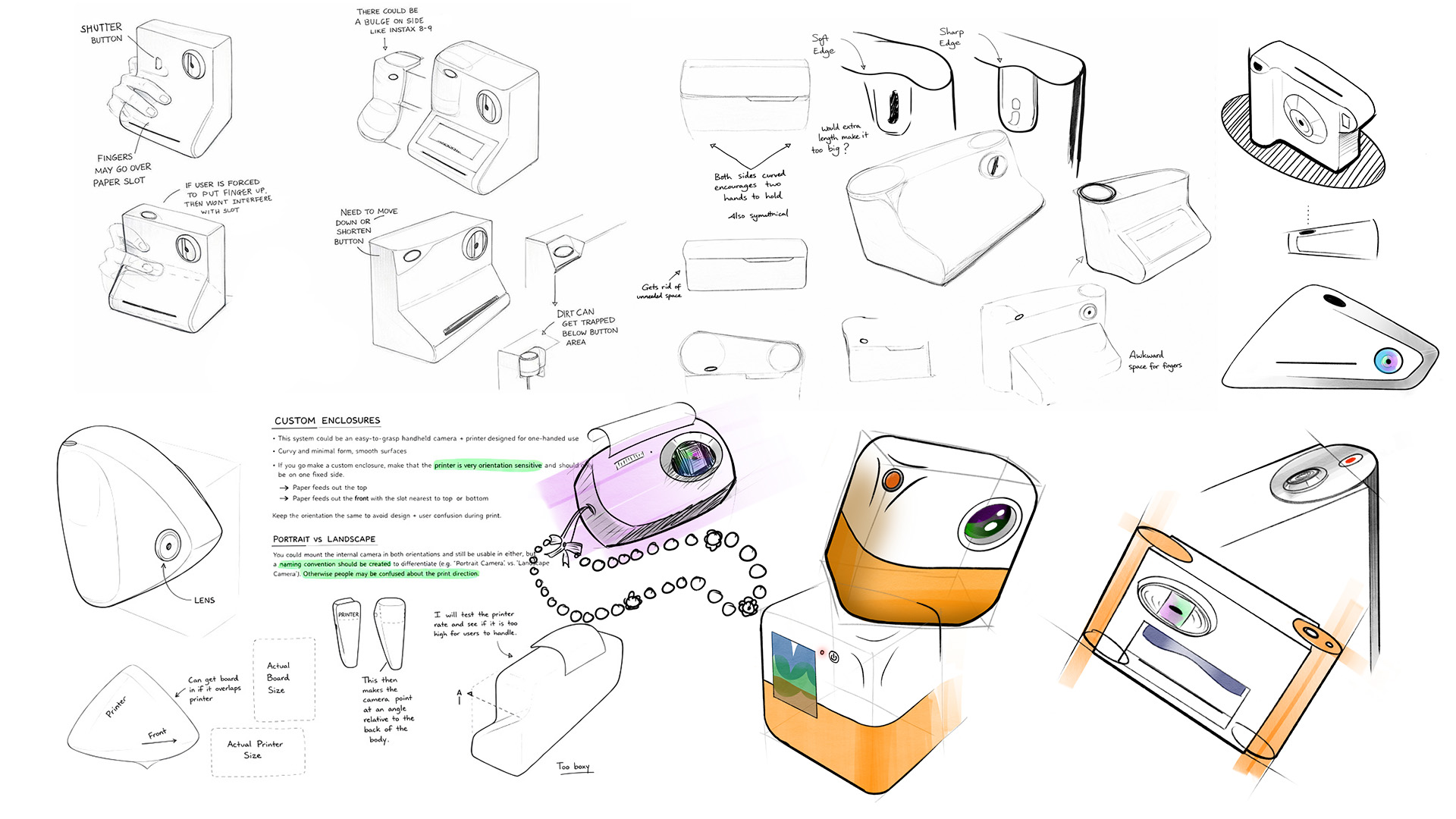
Initial concept sketches exploring form and function of a receipt-printer camera
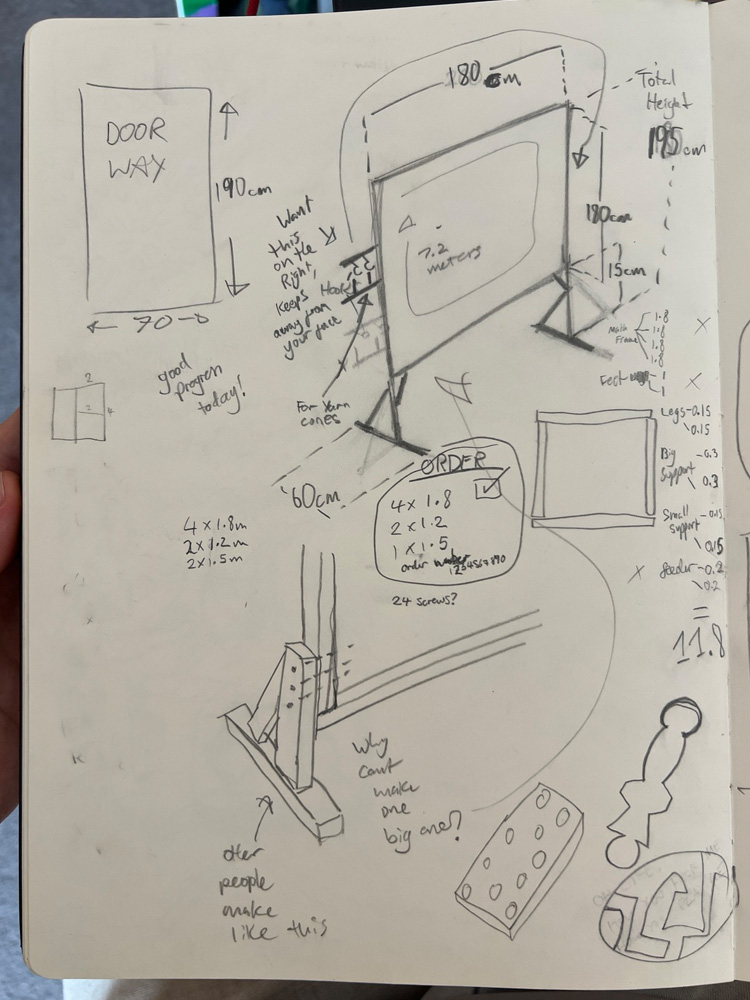
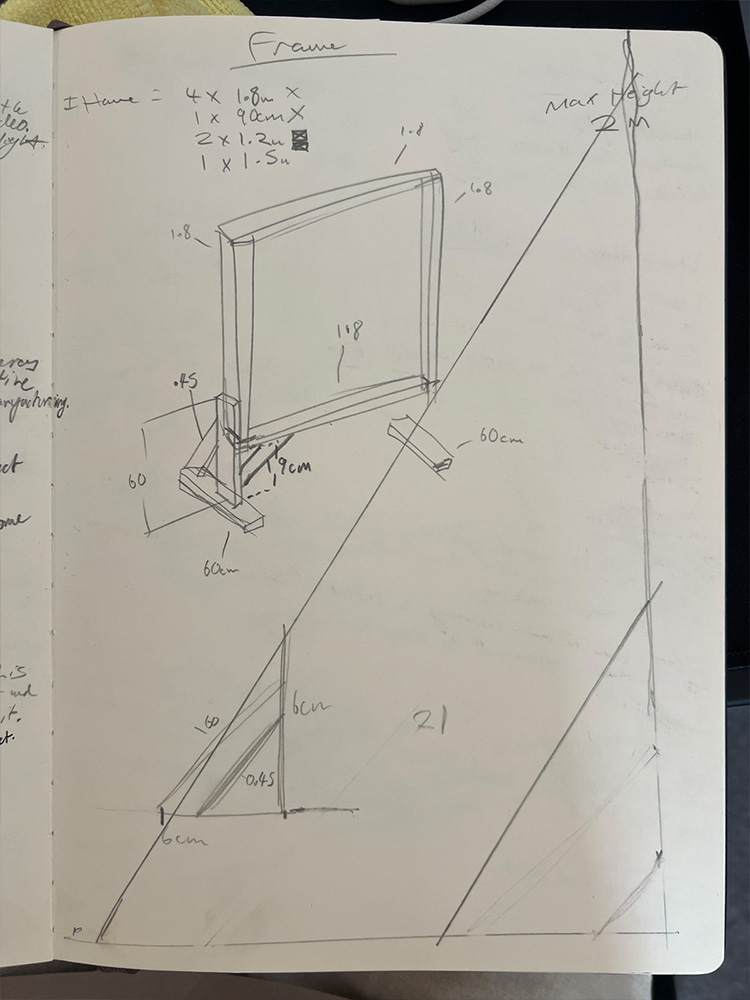
On-the-fly sketching for my personal project of rug making. These unasuming sketches gave birth to a large 2 x 2 meter rug tufting frame.
Renders
An aspect of the design process that I have refined significantly across multiple programs. Rendering can show the intended design in situ, as well as present concepts to a client.
Modelling
Concept modelling transforms 2D sketches into 3D forms, allowing for better understanding of spatial relationships, proportions, and ergonomics. I use whatever material is right for the design at-hand. If a fabric-based or organic design needs to be explored, then paper models are the obvious choice.
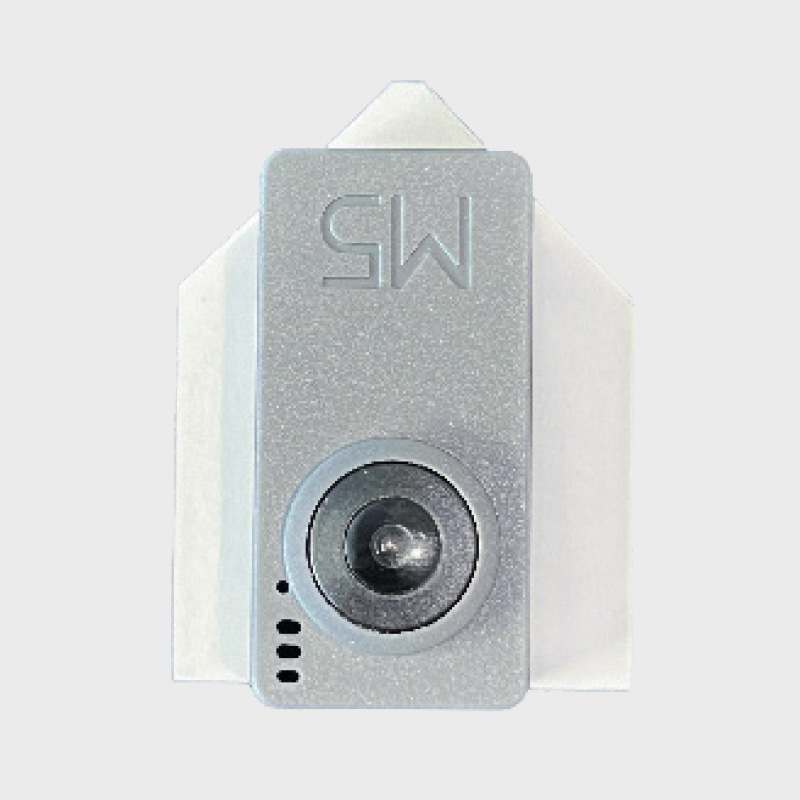
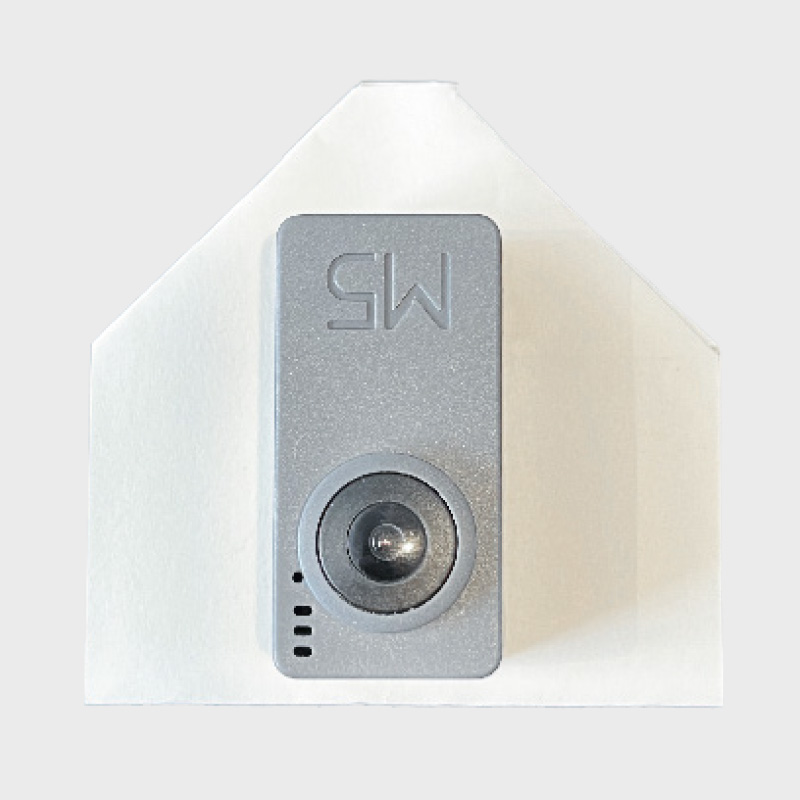
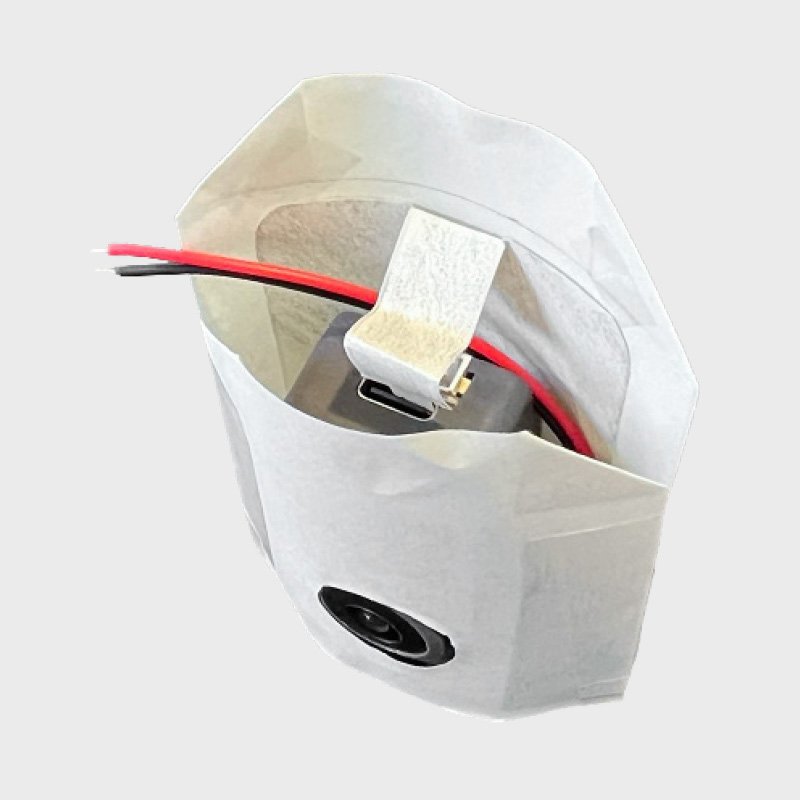
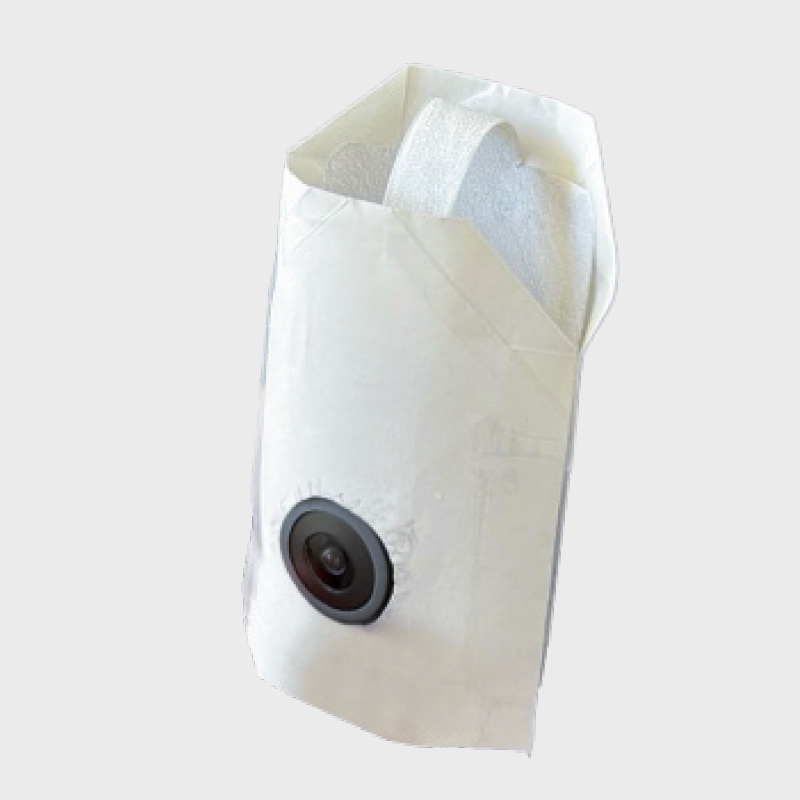
Physical, more robust models provide tactile feedback and help evaluate form at human scale, I used blue foam to create 36 different models of a camera housing for my final university project.
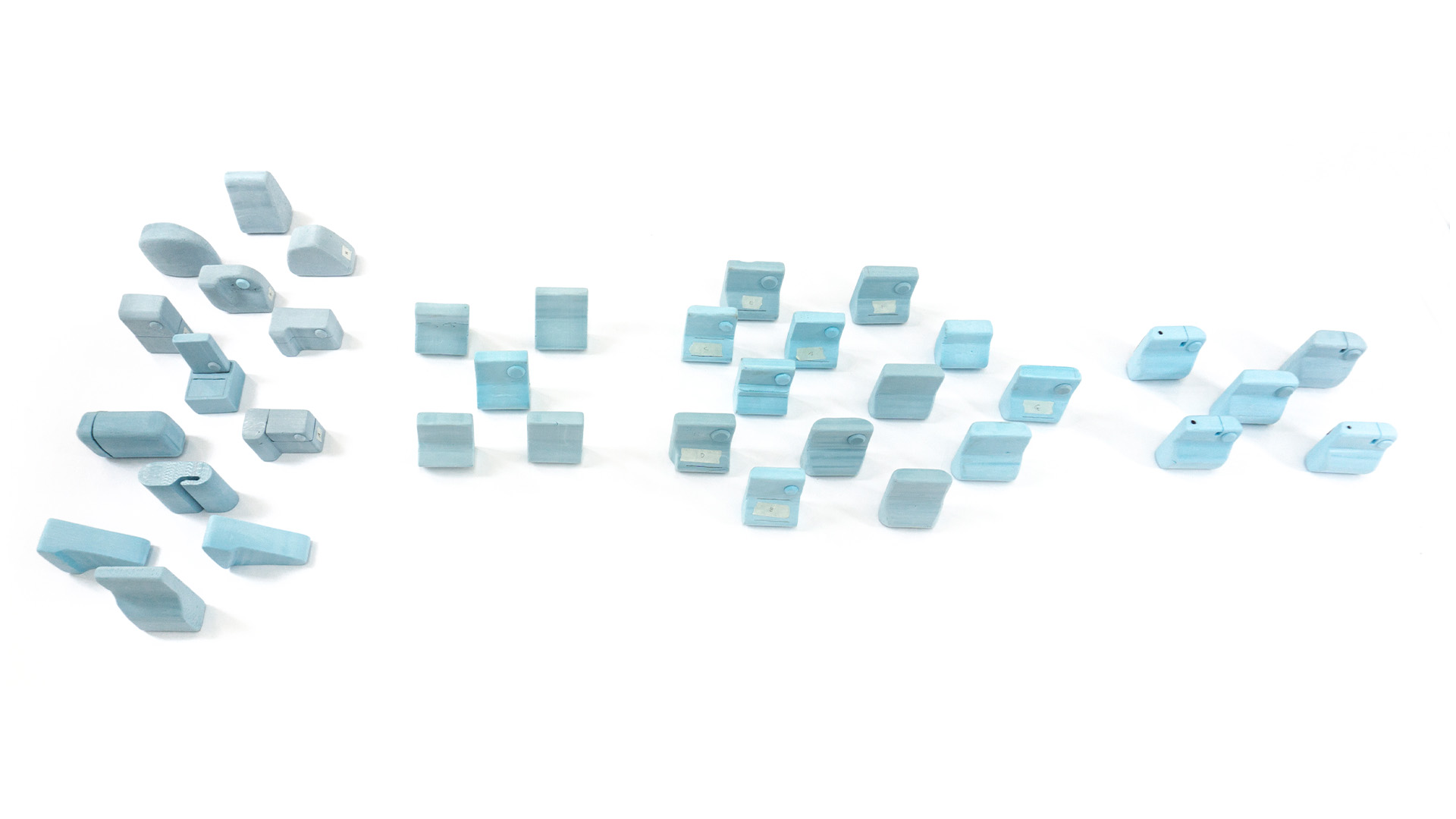
Model lineup showing iterative development
Research and Validation
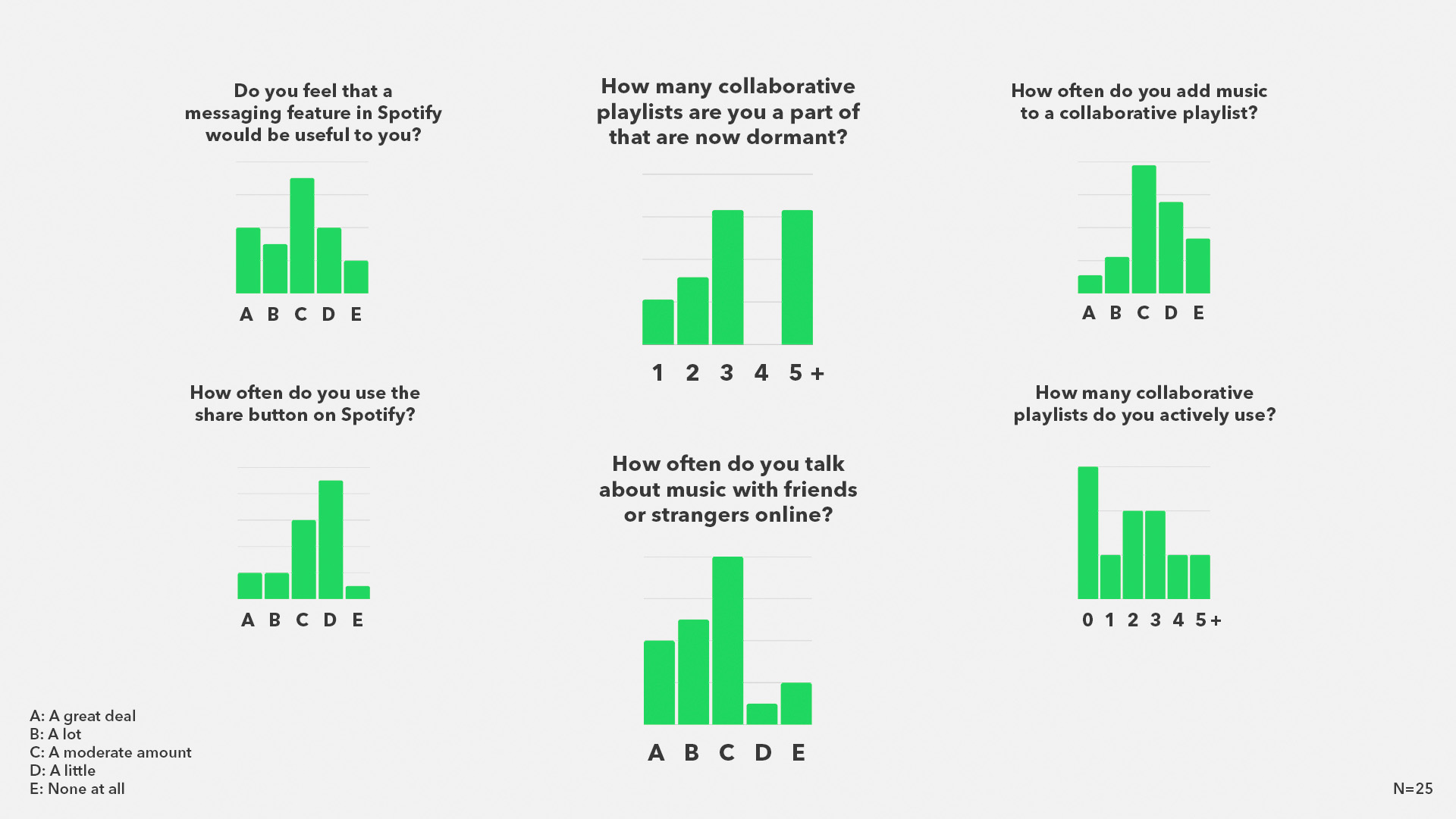
Research underpins every design decision, ensuring that concepts are grounded in user needs, market context, and technical feasibility. This includes user research, material research, and competitive analysis in live-market environments.